Every sales organization runs on a CRM. Salesforce, HubSpot, Dynamics, Pipedrive. The specific platform varies, but the dependency is universal. The CRM is the system of record, the source of truth, the foundation of the sales operation.
And yet, if you ask sellers what they actually think about their CRM, the responses are remarkably consistent:
- "It's where I have to log activities."
- "It's more for management than for me."
- "It tells me what I've done, not what to do."
This disconnect between the organizational investment in CRM and the actual utility sellers get from it reveals something important.
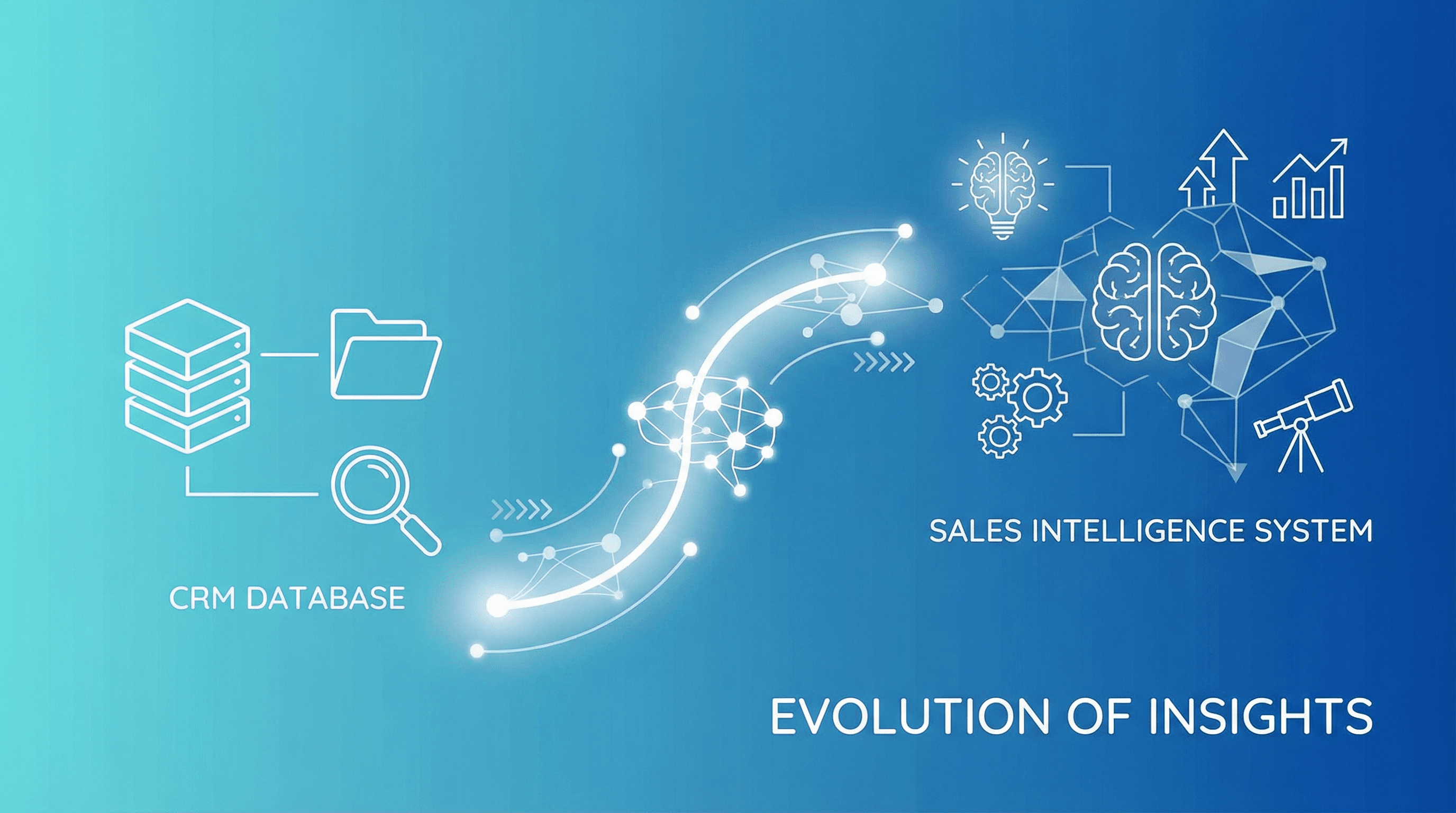
CRMs are systems of record, not systems of intelligence.
That distinction matters more than ever as AI reshapes what's possible in sales technology.
In this article, you'll learn: What CRMs were built for, the intelligence gap they leave behind, what sales intelligence platforms do differently, and how the two-layer stack is transforming B2B sales.
Jump to:
- What CRMs Were Built For
- The Intelligence Gap
- Data vs. Intelligence
- What Sales Intelligence Platforms Do Differently
- The Two-Layer Stack
What CRMs Were Built For
Let's give CRMs their due. They solved real problems when they emerged:
The Visibility Problem
Before CRM, sales was a black box. Managers had no idea what reps were doing. Forecasts were guesswork. Handoffs between reps meant lost context. CRM brought transparency to the sales process.
The Coordination Problem
As organizations grew, salespeople needed to share information. CRM provided a common database where everyone could see account history, contact details, and deal status.
The Accountability Problem
With logged activities and tracked stages, CRM enabled management. You could measure performance, identify gaps, and hold people accountable for results.
These were genuine advances. For many organizations, CRM remains essential for these functions.
Key Insight: CRMs solved management's problems. But solving management's problems isn't the same as helping sellers sell.
The Intelligence Gap
Here's what CRM doesn't do:
It Doesn't Tell You What to Research
CRM holds data you've already entered. It doesn't gather sales intelligence about prospects you're pursuing. It doesn't surface news, financial changes, or competitive moves. It doesn't analyze stakeholders or identify champions.
Just holding data is no more useful in any product. You need to bring intelligence out of the data and represent it in ways that drive action.
It Doesn't Prepare You for Meetings
Before an important call, you need context: what does this company care about? What are the stakeholders' priorities? What happened in previous conversations? CRM requires you to assemble this manually, if the data even exists. That's why meeting preparation requires more than just CRM access.
It Doesn't Guide the Conversation
Which questions should you ask? What objections should you anticipate? How should you position against the competitor they're also evaluating? CRM is silent on tactical selling.
It Doesn't Capture Meeting Intelligence
After a customer conversation, CRM asks you to write a note. But notes are incomplete, subjective, and inconsistent. The actual intelligence from the meeting (nuanced signals, stakeholder dynamics, unstated needs) often never makes it into the system.
It Doesn't Tell You What to Do Next
Your CRM tracks what happened. It doesn't tell you what's the next step you should follow through and do. There's no intelligence layer suggesting actions based on where you are in the sales journey. This is why so many meetings fail.
The Gap: CRMs excel at storing records. They were never designed to provide actionable intelligence that helps sellers in the moment.
Data vs. Intelligence: Why the Distinction Matters
The difference is fundamental:
| Data | Intelligence |
|---|---|
| Acme Corp has 500 employees | Acme Corp just promoted a new CIO with a transformation mandate |
| Last call was January 15 | Last call revealed budget concerns; CFO approval needed |
| Deal stage: Proposal | Deal risk: Competitor mentioned; champion going on leave |
| Contact: John Smith, VP Sales | John Smith prefers direct communication, skeptical of new vendors |
Data is static. Intelligence is actionable.
CRMs excel at data. They were never designed for intelligence.
What Sales Intelligence Platforms Do Differently
A new category of platforms addresses what CRM cannot:
Automated Research
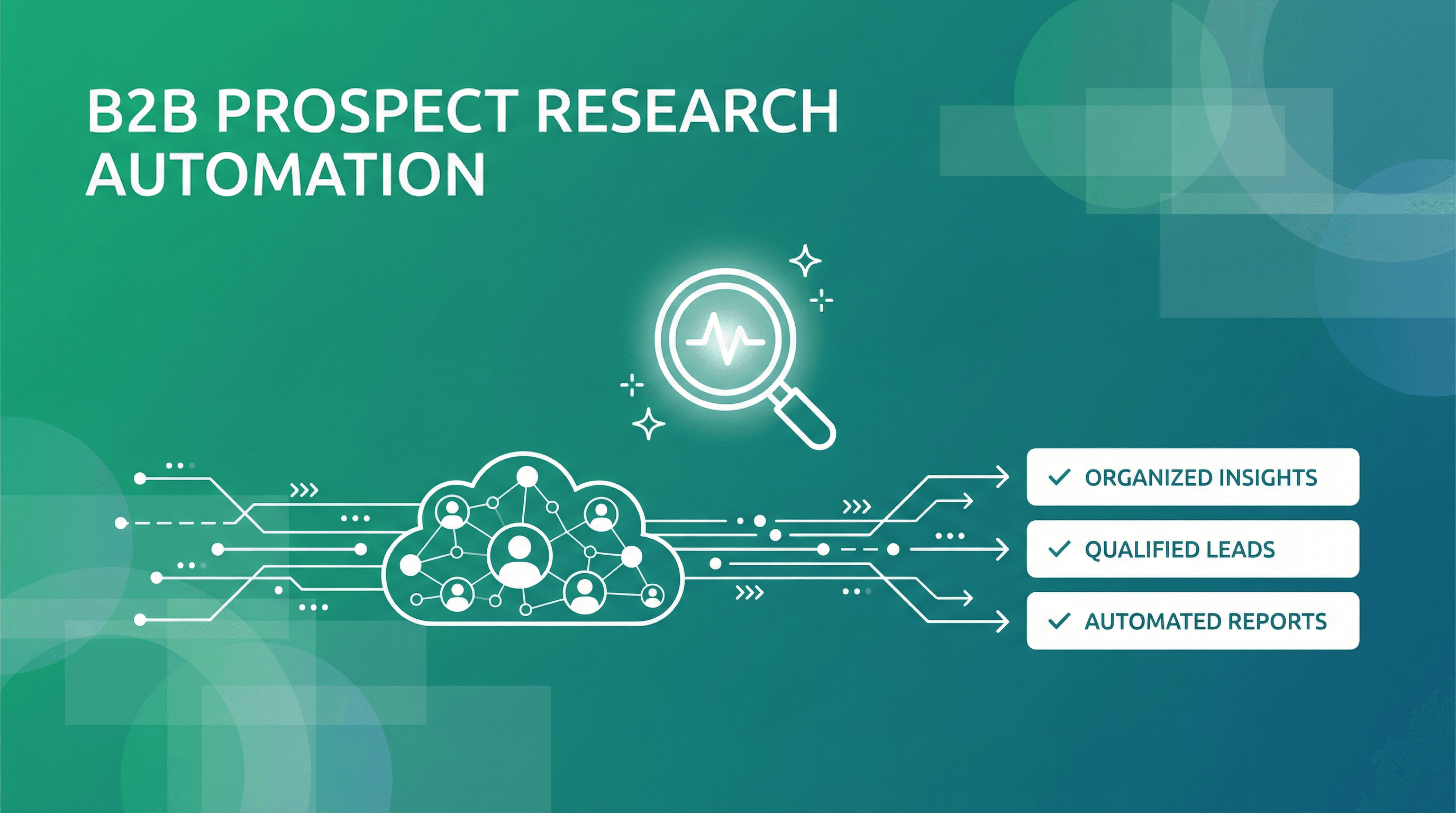
Instead of manual research before each meeting, intelligence platforms gather relevant information automatically:
- Company context from website, news, financials
- Stakeholder backgrounds from LinkedIn and digital footprints
- Recent developments that affect timing and priorities
- Competitive landscape and market positioning
What used to take 30-60 minutes now takes seconds. This is the foundation of automated prospect research.
Contextual Preparation
Before a meeting, intelligence platforms synthesize what you need to know into actionable briefs:
- Primary goals for this specific meeting
- Context about what's happening in their world
- Conversation flow and questions to ask
- Signals to listen for during the discussion
The seller walks in prepared, not scrambling.
Conversation Capture
With AI-powered transcription and analysis, meeting intelligence is captured automatically. Not just what was said, but what it means:
- Key points and commitments
- Action items with owners
- Buying signals and risk indicators
- Stakeholder dynamics and concerns
Nothing gets lost in translation to a CRM note.
Actionable Recommendations
Based on the intelligence gathered and the conversation captured, intelligence platforms suggest next steps:
- Who to follow up with and how
- What concerns to address
- Which opportunities need attention
- What preparation is needed for the next meeting
Key Insight: This combination of autonomy (AI suggests what to do) and automation (AI handles the execution) is what transforms selling.
The Two-Layer Stack
Forward-thinking sales organizations are arriving at a new architecture:
Layer 1: System of Record (CRM)
- Store customer and opportunity data
- Manage pipeline and forecasting
- Provide reporting and accountability
- Integrate with marketing and customer success
Layer 2: System of Intelligence
- Gather prospect and market intelligence
- Prepare sellers for meetings
- Capture and analyze conversations
- Recommend next best actions
- Feed insights back into CRM
The Integration
The two layers work together:
- Intelligence enriches CRM with data never captured manually
- CRM provides context for intelligence synthesis
- Both layers become more valuable together
This is not an either/or decision. It's an evolution from a single-layer stack to a two-layer stack where each component does what it's best suited for.
Pro Tip: Don't think of intelligence platforms as CRM replacements. Think of them as the layer that makes your CRM investment actually useful for day-to-day selling.
Why This Shift Is Happening Now
Several forces are converging:
AI Capabilities Have Matured
Automated research, transcription, summarization, and analysis weren't feasible at scale until recently. Now they're not just possible but increasingly affordable. What required dedicated research staff is now available to every seller.
Buyer Expectations Have Risen
Today's buyers have access to information, have done their research, and expect sellers to meet them with equal preparation. Generic conversations no longer work. The bar for meeting quality keeps rising.
Seller Time Is Scarce
The activities required to win a deal have expanded, but selling time hasn't. Anything that multiplies seller effectiveness (without adding hours) is valuable.
Data Alone Isn't Enough
Organizations have invested millions in data infrastructure, yet struggle to translate data into action. CRM implementations are mature, but seller adoption and data quality remain challenges. The intelligence layer bridges data and decisions.
What This Means for Your Organization
If you're evaluating your sales technology stack, consider these questions:
What percentage of seller time goes to non-selling activities?
Research, preparation, administrative work, CRM updates. If this number is high, you have an intelligence gap.
How prepared are your sellers walking into meetings?
Not what they claim, but what buyers experience. If meeting quality is inconsistent, preparation systems need attention.
What happens to meeting intelligence?
After conversations, does the insight get captured and used? Or does it sit in someone's head until it's forgotten?
How much do your systems tell sellers what to do?
Beyond storing data, do your tools actively guide action? Or do sellers have to figure out priorities on their own?
The answers reveal where intelligence platforms can create impact.
The Path Forward
CRM isn't going away. The system of record remains essential. Forecasting, reporting, and coordination still matter.
But expecting CRM to be the complete answer for sales effectiveness is expecting it to do something it was never designed for.
The organizations winning in competitive markets are adding intelligence layers:
- Automated research that happens in seconds
- Preparation systems that ensure every meeting starts strong
- Conversation analysis that captures what matters
- Action recommendations that tell sellers what to do next
Bottom Line: The shift from record to intelligence isn't a technology change. It's a philosophy change: from tracking what happened to actively improving what happens next.
Ready to Add Intelligence to Your Stack?
Keep your CRM for what it does well. Add DealMotion for what it can't do: research automation, meeting preparation, conversation intelligence, and action recommendations.
What you get:
- Complete prospect intelligence in minutes
- AI-generated meeting briefs
- Automatic meeting capture and analysis
- Recommended next actions for every opportunity
- CRM integration that enriches your data