You're about to walk into a meeting with a potential €500K deal on the line. You've got 30 seconds to make a first impression. Do you know what keeps their CEO up at night? Do you understand their competitive pressures? Can you connect your solution to their specific strategic initiatives?
For most B2B sellers, the honest answer is no. Not because they don't care, but because thorough prospect research traditionally takes hours. Time that doesn't exist when you're managing a full pipeline. And when meeting preparation suffers, deals stall.
After years of leading enterprise sales teams, we've seen the same pattern repeat: sellers know they should prepare better, but the math doesn't work. A portfolio of 40 opportunities times 45 minutes of research each equals a full work week. Before you've done any actual selling.
In this guide, you'll learn: What sales intelligence actually means, the three layers that matter, why traditional approaches fail, and how modern AI-powered approaches compress half a day's research into 10 minutes.
Jump to:
- What Sales Intelligence Actually Means
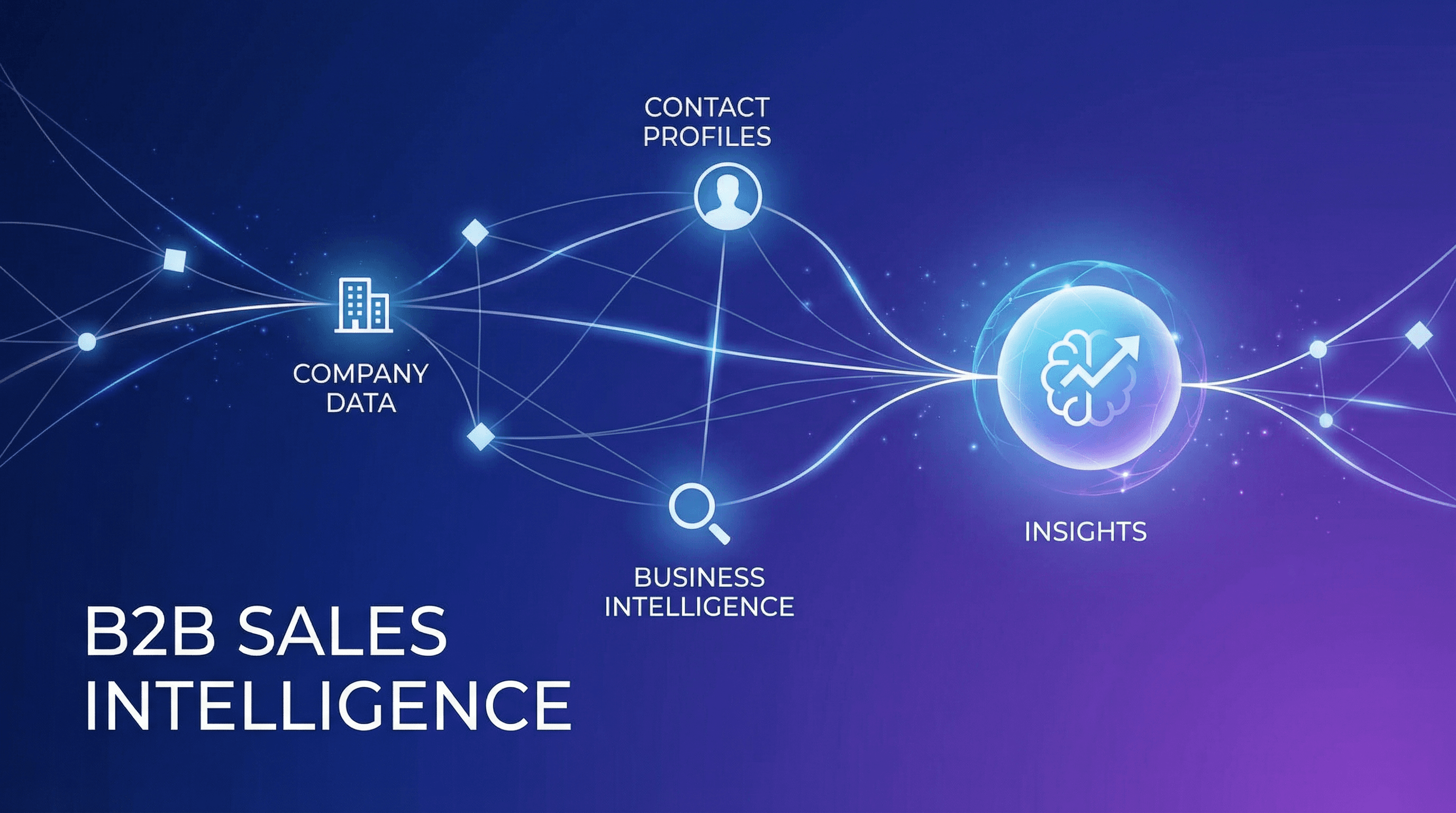
- The Three Layers of Sales Intelligence
- Why Traditional Research Approaches Fail
- Modern Sales Intelligence in Practice
- Getting Started
What Sales Intelligence Actually Means (And What It Doesn't)
Let's start by clarifying what we're talking about. Sales intelligence isn't just data collection. It's actionable insight that changes how you sell.
Data vs. Intelligence: A Critical Distinction
Data: "Acme Corp has 500 employees, €50M in revenue, and is headquartered in Amsterdam."
Intelligence: "Acme Corp just promoted a new CIO who previously led a digital transformation initiative at their main competitor. Their annual report emphasizes operational efficiency as a top priority, and they've been hiring for automation-related roles. The CIO likely has budget and mandate to make changes, with limited patience for vendors who waste their time."
The first is a fact. The second is a story that tells you how to approach the conversation, what to emphasize, and which landmines to avoid.
The 360° Prospect Intelligence Framework
Think of comprehensive sales intelligence as a 360-degree view of your prospect:
| Component | Questions Answered | Impact on Selling |
|---|---|---|
| Company Identity | What do they do? How are they structured? | Frame your solution in their context |
| Revenue Model | How do they make money? Who are their customers? | Connect to business outcomes |
| Decision-Making Dynamics | Who decides? What's the process? | Navigate the organization effectively |
| Strategic Priorities | What are their stated goals? Recent initiatives? | Align your pitch to their agenda |
| Competitive Landscape | Who do they compete with? What pressures exist? | Understand urgency and constraints |
| Key People | C-suite backgrounds? Career trajectories? | Personalize your approach |
When you have this complete picture, you walk into meetings prepared to the teeth. You'll surprise prospects with knowledge they may not even have themselves. This is why 80% of unprepared meetings fail.
Key Insight: The difference between data and intelligence is the difference between knowing facts and understanding stories. Stories sell, facts support.
The Three Layers of Sales Intelligence
Not all intelligence is equal. Understanding the layers helps you prioritize what to gather and how to use it.
Layer 1: Company Intelligence
This is your foundation: understanding the organization as an entity:
- Business model: How they create and capture value
- Financial health: Growth trajectory, funding, public filings
- Organizational structure: Reporting lines, departments, decision-making units
- Strategic initiatives: What they're investing in, public commitments
- Recent developments: News, announcements, leadership changes
- Market position: Competitors, differentiation, challenges
Modern AI can synthesize this from dozens of sources (company website, LinkedIn, news, financial databases, industry reports) into a coherent narrative in minutes.
Layer 2: Contact Intelligence
Understanding the people is often more important than understanding the company:
- Professional background: Career trajectory, previous companies, education
- Current role: Responsibilities, tenure, reporting structure
- Communication style: How they present themselves, what they share publicly
- Potential motivations: What might they care about given their role?
- Connections: Mutual contacts, shared experiences, common ground
A contact's LinkedIn profile tells a story, if you know how to read it. Learn more about effective contact analysis techniques in our platform overview.
Pro Tip: Before any meeting, spend 2 minutes reviewing your contact's last 5 LinkedIn posts. This reveals what they care about right now, not what their job title suggests they should care about.
Layer 3: Relationship Context
This layer is about your specific interaction:
- How they found you: Inbound vs. outbound, content engaged
- Previous touchpoints: Past conversations, emails, meetings
- Stage in their journey: Early exploration vs. active evaluation
- Buying signals: Urgency indicators, competitive mentions
- Knowledge base: What do they already know about you?
Why Traditional Research Approaches Fail
If sales intelligence is so clearly valuable, why do most sellers underprepare?
The Math Problem
A typical account executive manages 30-50 active opportunities. If thorough research takes 45 minutes per company (and that's conservative for complex B2B), we're talking 22-37 hours just on research. Not including the actual selling.
So sellers triage. They do minimal research on most opportunities and save deep dives for the biggest deals. The result? They're walking into the majority of their meetings underprepared.
The Tool Fragmentation Problem
Even motivated sellers face friction:
- Company info on their website
- Financial data in Crunchbase or public filings
- News via Google
- Contact info on LinkedIn
- Previous interactions in the CRM
- Notes in various apps and documents
Assembling a complete picture means switching between 6-10 sources, synthesizing manually, and hoping you didn't miss something important. CRMs track what happened, but they don't provide this intelligence layer.
The Real Cost: If your average deal is worth €50,000 and poor preparation costs you just 2 deals per year, that's €100,000 in lost revenue. The ROI of better preparation isn't theoretical, it's measurable. See how B2B sales teams prepare differently with modern tools.
What Modern Sales Intelligence Looks Like in Practice
Here's how a modern intelligence-driven approach changes the seller's day:
Before: The Manual Approach
Sarah has a discovery call tomorrow with a potential client. Her preparation:
- Visit their website, skim the About page (10 min)
- Look up the contact on LinkedIn (5 min)
- Google the company for recent news (10 min)
- Check CRM for any previous touchpoints (5 min)
- Review her own notes and prep talking points (15 min)
Total: 45 minutes. And she still missed the recent leadership change that will dominate the conversation.
After: The Intelligence-Driven Approach
Sarah enters the company name. Within 2-3 minutes, she has:
- 360° Prospect Intelligence Report covering company identity, structure, financials, customers, C-suite, and decision-making dynamics
- BANT qualification indicators
- Contact analysis with career trajectory and communication insights
- Recent news and strategic priorities
- Specific talking points based on her seller profile and what she's selling
She spends 5 minutes reviewing and synthesizing. Total: 8 minutes. She knows more than she did with 45 minutes of manual research.
Time Savings Calculator: If you have 40 opportunities and save 35 minutes per opportunity, that's 23+ hours per month you can reinvest in actual selling. See how DealMotion automates this.
Getting Started
- Audit your current preparation: How much time do you spend? What do you typically miss?
- Define your intelligence requirements: What would "fully prepared" look like?
- Evaluate your tools: Are you spending time on work that could be automated?
- Start with high-stakes meetings: Apply thorough preparation where it matters most
- Measure the difference: Track meeting quality and outcomes
The goal isn't perfect preparation. It's consistent, good preparation that scales across your entire pipeline.
Bottom Line: Sales intelligence isn't about knowing everything. It's about knowing enough to have relevant conversations that build trust and accelerate decisions.
Ready to Transform Your Meeting Preparation?
Stop spending hours on manual research. DealMotion's 360° Prospect Intelligence gives you complete company and contact analysis in minutes, so you can walk into every meeting prepared to close.
What you get:
- Complete company intelligence (structure, financials, strategy, C-suite)
- Contact analysis with career trajectory and communication insights
- Personalized talking points based on your solution and their needs
- BANT qualification indicators