"I know I should prepare more, but there just isn't time."
I've heard this from hundreds of sales professionals over the years. And they're right: traditional preparation doesn't fit into a modern seller's day. Between back-to-back calls, CRM updates, and quota pressure, spending 45 minutes researching one prospect feels like a luxury.
But here's what I've learned after leading enterprise sales teams: trust is very important in closing deals. And nothing builds trust faster than walking into a meeting prepared to the teeth, demonstrating that you've done your homework, understand their world, and respect their time.
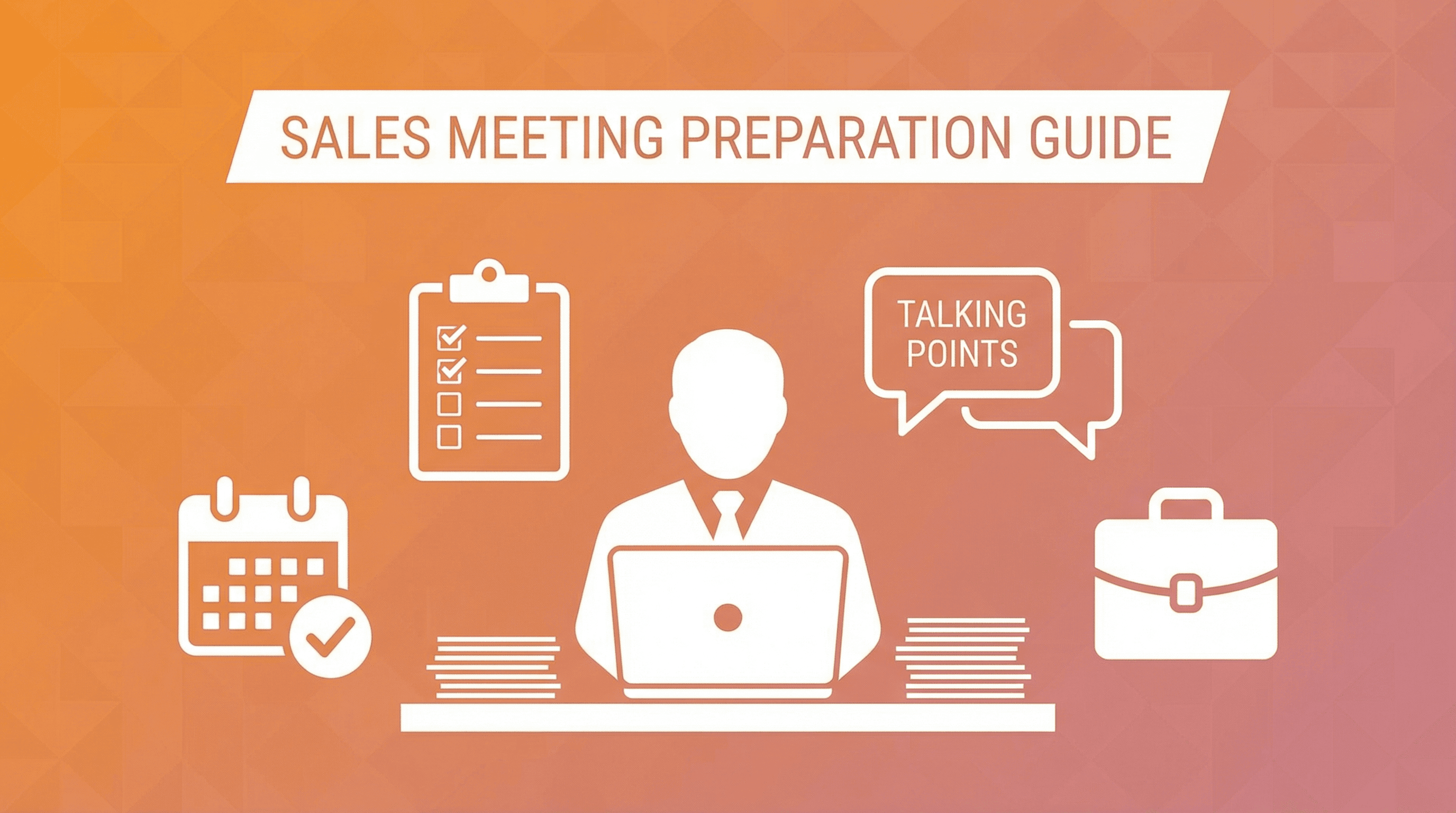
In this guide, you'll learn: What a comprehensive Meeting Brief should contain, how AI-powered preparation changes the seller's day, and how to maintain consistent preparation quality across your entire pipeline.
Jump to:
- What Actually Needs to Be in a Meeting Brief
- The Transformation: Before and After AI-Powered Prep
- Meeting Preparation by Meeting Type
- The Follow-Through: What Happens After
- Making Preparation Sustainable
What Actually Needs to Be in a Meeting Brief
Most sellers think preparation means "reviewing the prospect's website." That's just scratching the surface. A comprehensive Meeting Brief answers the questions that actually matter. This requires proper sales intelligence as a foundation.
1. Primary Goals
What are you trying to achieve in this specific meeting? This varies by meeting type:
| Meeting Type | Primary Goal |
|---|---|
| Discovery Call | Understand their situation, qualify the opportunity |
| Demo | Connect your solution to their stated needs |
| Negotiation | Address concerns, move toward agreement |
| Executive Meeting | Secure sponsorship, accelerate timeline |
Your brief should state the goal explicitly. Vague objectives lead to vague outcomes.
2. Context: What's Happening in Their World
This is where most preparation falls short. You need to understand:
- Their strategic priorities (from company research)
- Recent developments (news, leadership changes, funding)
- Competitive pressures they face
- The specific challenges your solution might address
Pro Tip: Great briefs synthesize this into a narrative: "Acme is in the middle of a digital transformation initiative, driven by new leadership and pressure from competitors who've moved faster. They're looking for operational efficiency gains before Q3 board review."
3. Why This Matters to Them
Not generic value propositions, but specific relevance to their situation. Based on what you know about the company and the person:
- What problems do they likely face given their role?
- What would success look like for them personally?
- What risks are they trying to avoid?
This is the "so what" that connects your research to your pitch.
4. Topics to Handle Carefully
Every meeting has potential landmines:
- Recent layoffs or restructuring
- Failed initiatives similar to what you're proposing
- Competitive relationships or past vendor experiences
- Political dynamics between stakeholders
A good brief flags these so you're not surprised.
5. Conversation Flow
Not a script, but a structure. Where should the conversation go?
- Opening: How to establish relevance quickly
- Discovery: Key questions to ask
- Value: Which capabilities to emphasize
- Next steps: What you're asking for
6. Questions to Ask
Informed questions (not "tell me about your challenges") show preparation:
- "I noticed you recently announced [initiative]. How is that affecting priorities for your team?"
- "Your CEO mentioned [priority] in the annual report. How does that translate to your department?"
- "Given your background in [relevant experience], how are you approaching [challenge]?"
7. Signals to Listen For
What should you pay attention to during the conversation?
- Buying signals: budget mentions, timeline urgency, stakeholder involvement
- Warning signs: deflection, vague answers, lack of authority
- Expansion opportunities: adjacent problems, other departments, bigger scope
8. If You Remember Just One Thing
Every brief should have this: the single most important thing to know going into this meeting. When you're in the hallway about to walk in, this is what you need in your head.
Key Insight: A complete brief isn't about having all the answers. It's about walking in with the right questions and the context to understand the answers.
The Transformation: Before and After AI-Powered Prep
Let me show you what this looks like in practice.
Before: Traditional Preparation
Marcus has a demo scheduled for tomorrow. His prep:
- Skim the company website (10 min)
- Check the contact's LinkedIn (5 min)
- Review his standard demo script (5 min)
- Maybe glance at CRM for previous notes (5 min)
He walks in with surface-level knowledge. When the prospect mentions their "Focus 2026" initiative, Marcus has no idea what they're talking about. The conversation stays generic.
After: AI-Powered Meeting Brief
Marcus enters the prospect and contact details. His meeting brief includes:
- Primary Goals: Demo focused on operational efficiency; validate fit with procurement team requirements
- Context: Company announced "Focus 2026" initiative in Q4, emphasizing cost reduction and automation. CFO has publicly committed to 15% operational savings.
- Stakeholder: Director of Operations, promoted 8 months ago, previously at competitor where she led similar transformation. Known for data-driven decisions.
- Why This Matters: She's likely under pressure to show results from Focus 2026. Quick wins matter more than long-term transformation stories.
- Handle Carefully: Previous vendor relationship ended poorly (found in news). Don't reference competitors directly.
- Conversation Flow: Open with Focus 2026 acknowledgment → Ask about Q2 priorities → Demo efficiency features → Discuss implementation timeline
- Key Questions: "How is Focus 2026 affecting priorities for your team?" "What would success look like by end of Q2?"
- Listen For: Specific budget signals, mention of other stakeholders who should see this, timeline pressure
- One Thing: She needs a quick win to validate Focus 2026 investment. Position everything around speed to value.
Marcus reviews this in 5 minutes. He walks in referencing Focus 2026 in his opening sentence. The prospect visibly relaxes. This seller gets it.
Time Savings: 25 minutes of traditional prep vs. 5 minutes of review. More importantly, Marcus knows things he would have missed entirely with manual research.
Meeting Preparation by Meeting Type
Different meetings require different preparation emphasis.
Discovery Call
Focus: Understanding their world
Your brief should emphasize:
- Questions that reveal pain points, priorities, process
- Company context that informs what to ask
- Qualification criteria (BANT or your preferred framework)
- Signals that indicate opportunity quality
Goal: Leave knowing whether this is a real opportunity and what the next step should be.
Demo/Presentation
Focus: Connecting solution to context
Your brief should emphasize:
- Which capabilities matter given their stated needs
- Specific examples relevant to their industry or situation
- Stakeholder-specific value (technical vs. executive)
- Competitive positioning if alternatives are known
Goal: Generate specific interest and commitment to next steps.
Proposal/Negotiation
Focus: Navigating to decision
Your brief should emphasize:
- Decision-making dynamics and stakeholder map
- Known objections and prepared responses
- Competitive landscape and differentiation
- Walk-away points and negotiation flexibility
Goal: Move toward decision or clear next step.
Executive Meeting
Focus: Strategic alignment
Your brief should emphasize:
- Executive's priorities and communication style
- Business outcomes, not feature discussions
- Proof points and references they'll find credible
- Direct ask and expected commitment
Goal: Secure executive sponsorship and accelerate the process.
The Follow-Through: What Happens After the Meeting
Preparation doesn't end when the meeting starts. The best sellers extend preparation into follow-up.
During the Meeting: Capture Intelligence
With AI notetakers, you don't have to memorize or scribble notes. The conversation is captured and transcribed automatically. Smart filters ensure the notetaker joins important calls (demos, discoveries) but not internal standups.
After the Meeting: Actionable Outputs
From the transcript, you can generate:
| Output | Purpose |
|---|---|
| Client Summary | Professional summary to send to the prospect |
| Action Items | Extracted commitments with owners |
| Commercial Analysis | Buying signals, risk assessment, deal health |
| Sales Coaching | Feedback on what you did well and what to improve |
| CRM Report | Structured update for your system of record |
When you send a meeting summary to a customer, something powerful happens: the conversation becomes what was written down. The next meeting builds on that foundation rather than relying on imperfect memory.
Key Insight: CRMs track what happened, but they don't help you prepare for what's next. The integration of preparation, capture, and follow-up is what closes the loop.
Making Preparation Sustainable
The goal isn't perfect preparation for one meeting. It's consistent, good preparation for every meeting.
1. Block Time for Prep
Calendar 15 minutes before every external meeting. Treat it as part of the meeting, not optional.
2. Use Consistent Frameworks
Same brief structure every time means faster review. You know where to look for what.
3. Leverage Your Context
Your sales profile, company profile, and knowledge base should inform your briefs. AI that knows what you sell and who you are generates more relevant preparation, just like with automated prospect research.
4. Capture and Build
Every meeting adds intelligence. Notes become context. Insights become strategy. The next meeting starts from a stronger foundation than the last.
5. Prioritize When Needed
If you can't prepare thoroughly for everything, prioritize:
- First meetings (impressions matter)
- Executive meetings (stakes are higher)
- Closing conversations (details matter)
The Compound Effect of Preparation
Sellers who prepare consistently experience compound effects:
- Buyer trust increases: They see you respect their time
- Conversations deepen: You skip the basics and get to substance
- Win rates improve: Prepared sellers outperform unprepared ones
- Cycles shorten: Fewer clarification loops, faster progress
- Stress decreases: Walking in prepared feels different
Bottom Line: I can surprise people before meetings with knowledge that they maybe even don't know themselves. That's the feeling of being truly prepared: not anxious about what you might miss, but confident in what you know.
Ready to Transform Your Meeting Preparation?
Stop winging important meetings. DealMotion's Meeting Briefs give you everything you need (primary goals, context, conversation flow, questions, and signals) in minutes instead of hours.
What you get:
- AI-generated meeting briefs tailored to your selling context
- Stakeholder analysis with communication insights
- Automatic meeting capture and follow-up generation
- CRM integration for complete visibility